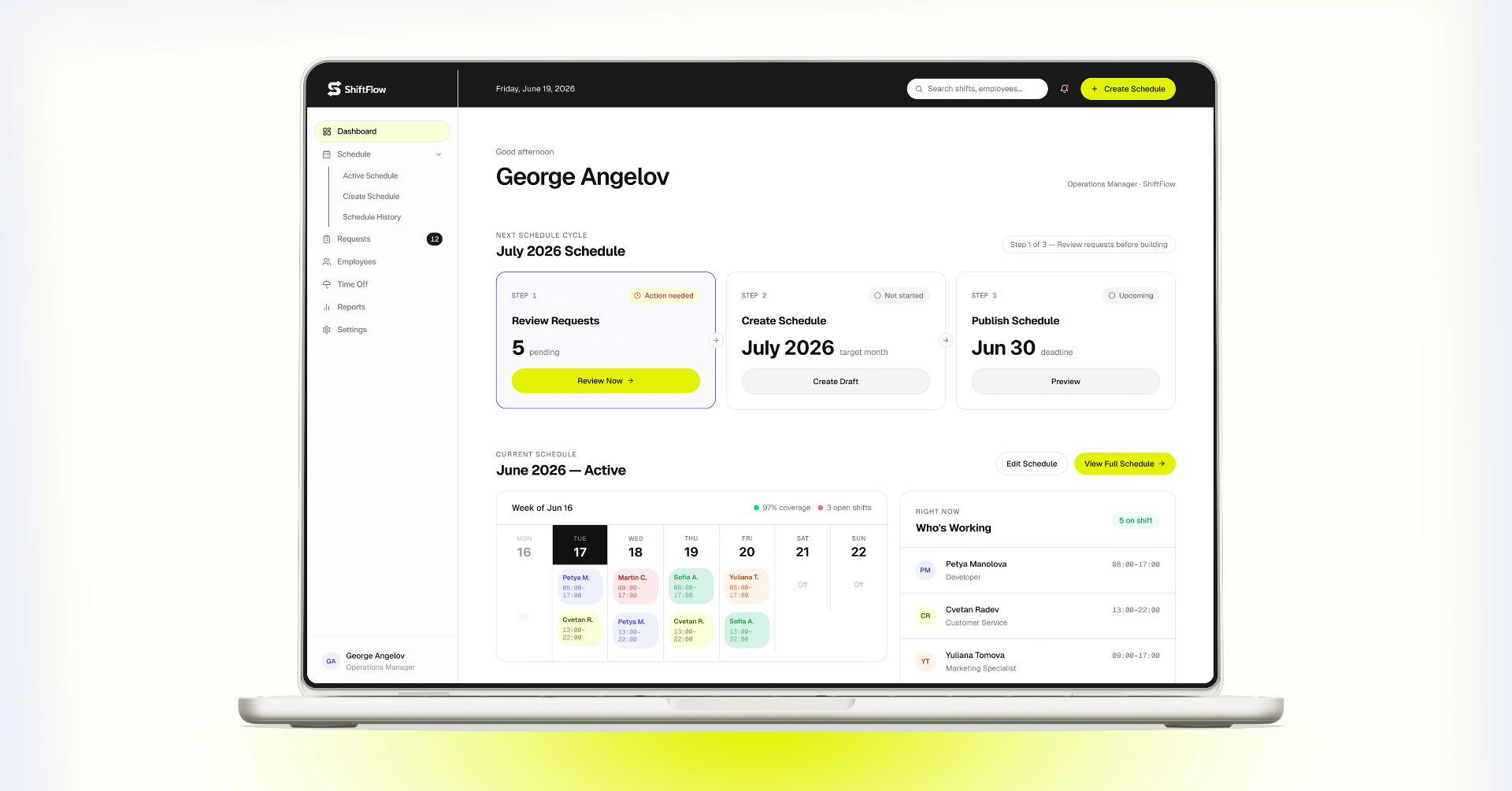
01Core Problem
Built by watching a real weekly struggle
Observed directly: a shift supervisor in a public-sector role, building the team schedule by hand in Excel every week, with only a basic formula to total hours at the end.
Matching shifts to availability and preferences ate up hours each week. Duplicate assignments and scheduling errors crept in regularly. Coordinating changes with the whole team afterward took as long as building the schedule itself.
Building the schedule is easy. Keeping it updated is the hard part.
02Research
The spreadsheet trap, confirmed
10-30%
error rate in spreadsheet-based scheduling. 88% of business spreadsheets contain errors.
3-8
hours spent weekly on manual scheduling once availability, changes, and overtime checks are included.
10-15
hours lost weekly by mid-sized operations just creating, adjusting, and redistributing schedules.
15
hours saved weekly by managers who move from manual to automated scheduling.
Before making any change, I have to check availability in three different places.
03Key Decisions
One workflow, not five spreadsheets
The whole picture, before any change
The full schedule needs to be readable at a glance before any adjustment gets made.
Catch conflicts before publishing
Conflict indicators surface double-bookings and overlaps early, removing the need for manual cross-checking.
All the scattered pieces, now in one place
Availability, shift data, and employee information live in a single workflow instead of scattered spreadsheets and messages.
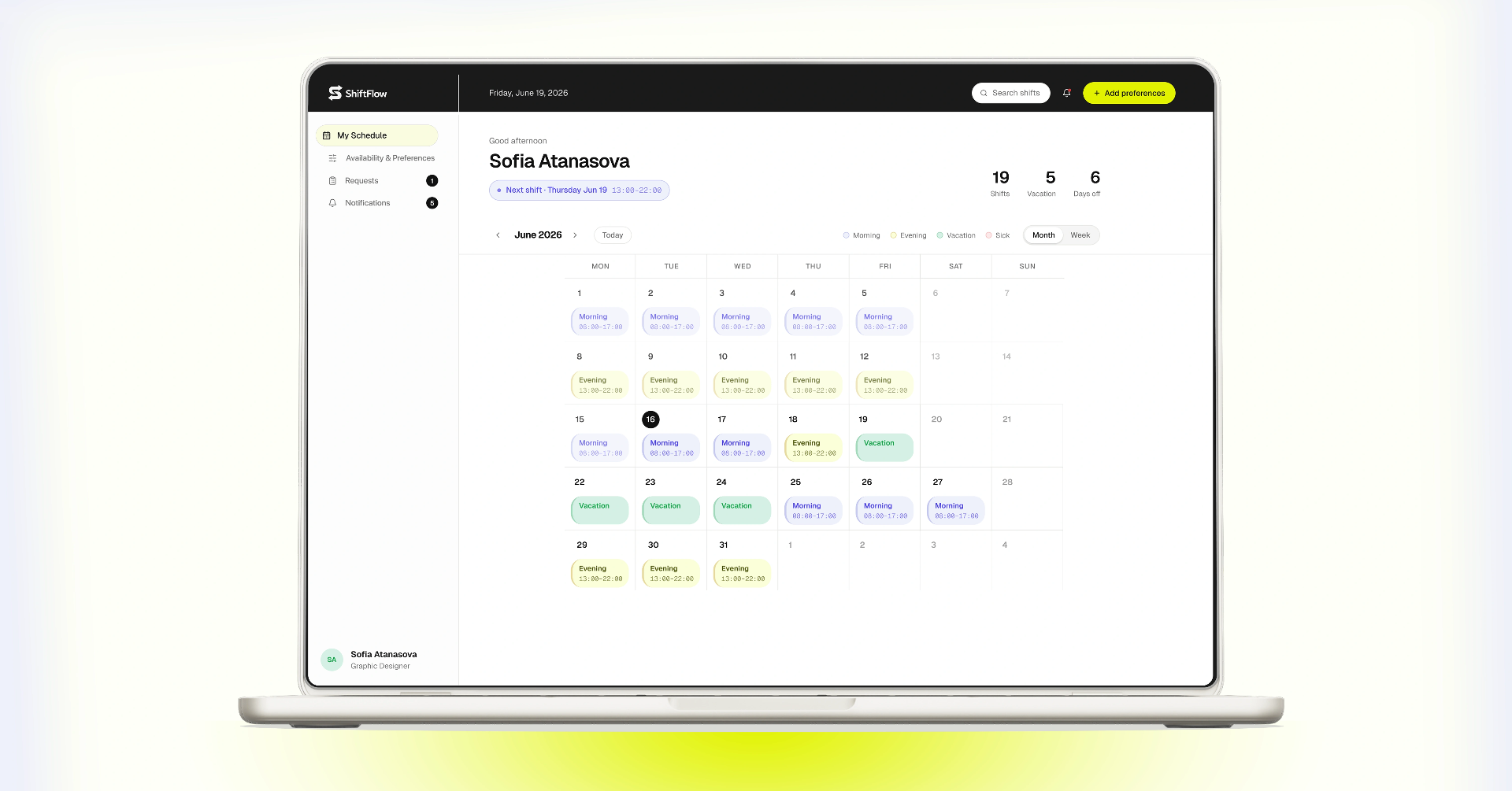
04Status
In active development. Live tool coming soon.