The missing layer on smart infrastructure
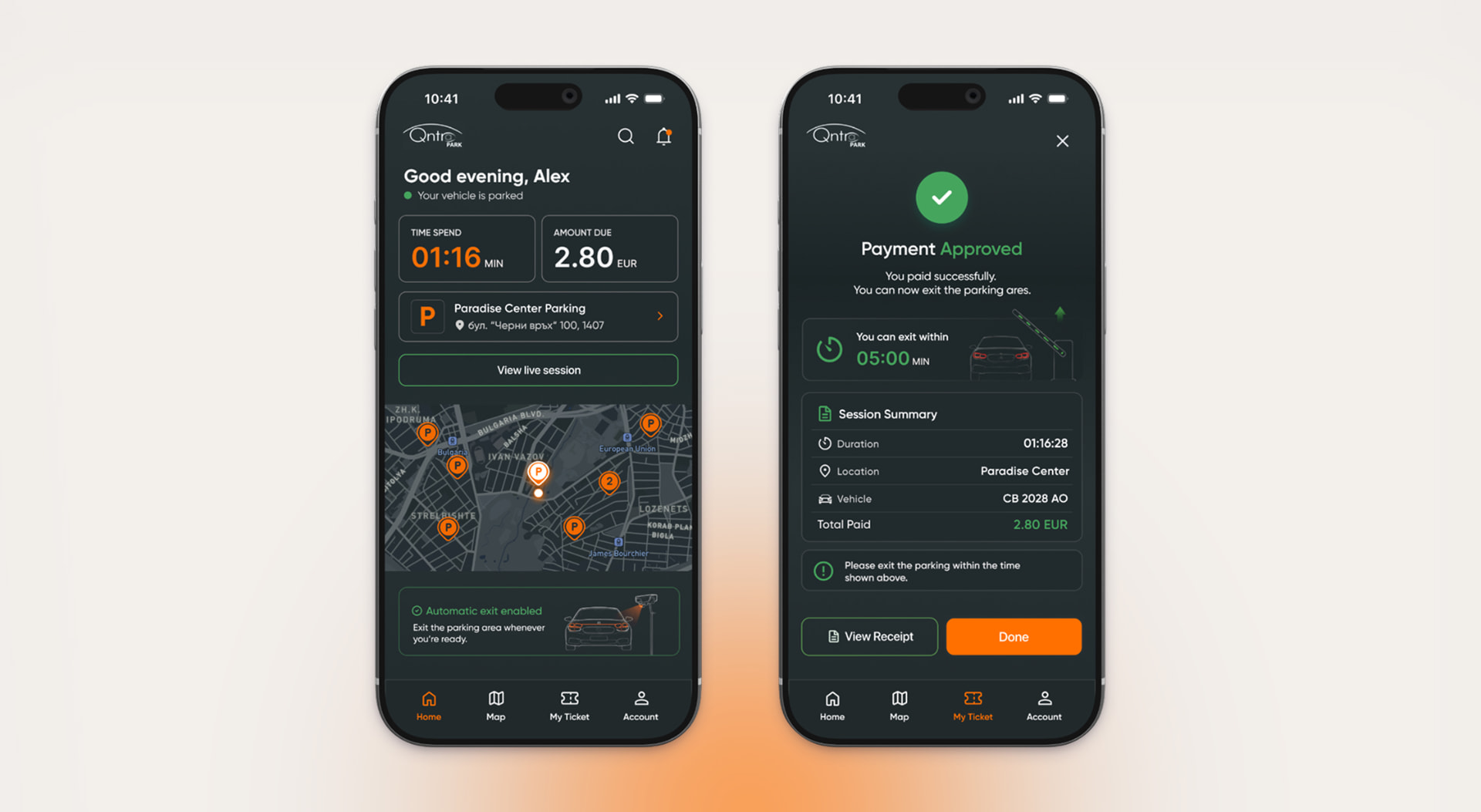
Smart parking is a mobile parking app designed around existing private parking infrastructure: ANPR cameras, barrier automation, and parking management systems. Instead of replacing what works, the app adds the missing layer, a connected mobile experience that gives drivers live session visibility, digital payments, and a seamless entry and exit flow.
Smart infrastructure, manual experience
Despite advances in parking automation, drivers still rely on physical tickets and payment terminals. The result is friction at exactly the moments that matter most: entry, exit, and paying.
The infrastructure was already smart. The user experience wasn't.
Figuring out what actually needed solving
What we tried and didn't work
Attempted to unify gated parking lots and city curbside zones into a single experience. Testing showed drivers found the combination confusing, two different mental models in one interface. Narrowed back to gated parking alone.
How does a session start without the driver telling it to?
A visible session only helps if it starts on its own, no app, no check-in tap. Drivers already wanted less to do, not a new step to remember.
Choosing ANPR over scanning or check-in
Considered QR scanning and geofencing, both still needed an action or lacked precision. ANPR won: it asks nothing of the driver, and the cameras already exist at most gates. No new hardware required.
What if there's no signal or battery, to pay?
Entry no longer needed the phone, but exit still did: a live payment confirmation. Underground levels make that a real failure, not an edge case.
Choosing pay-by-plate over in-app confirmation
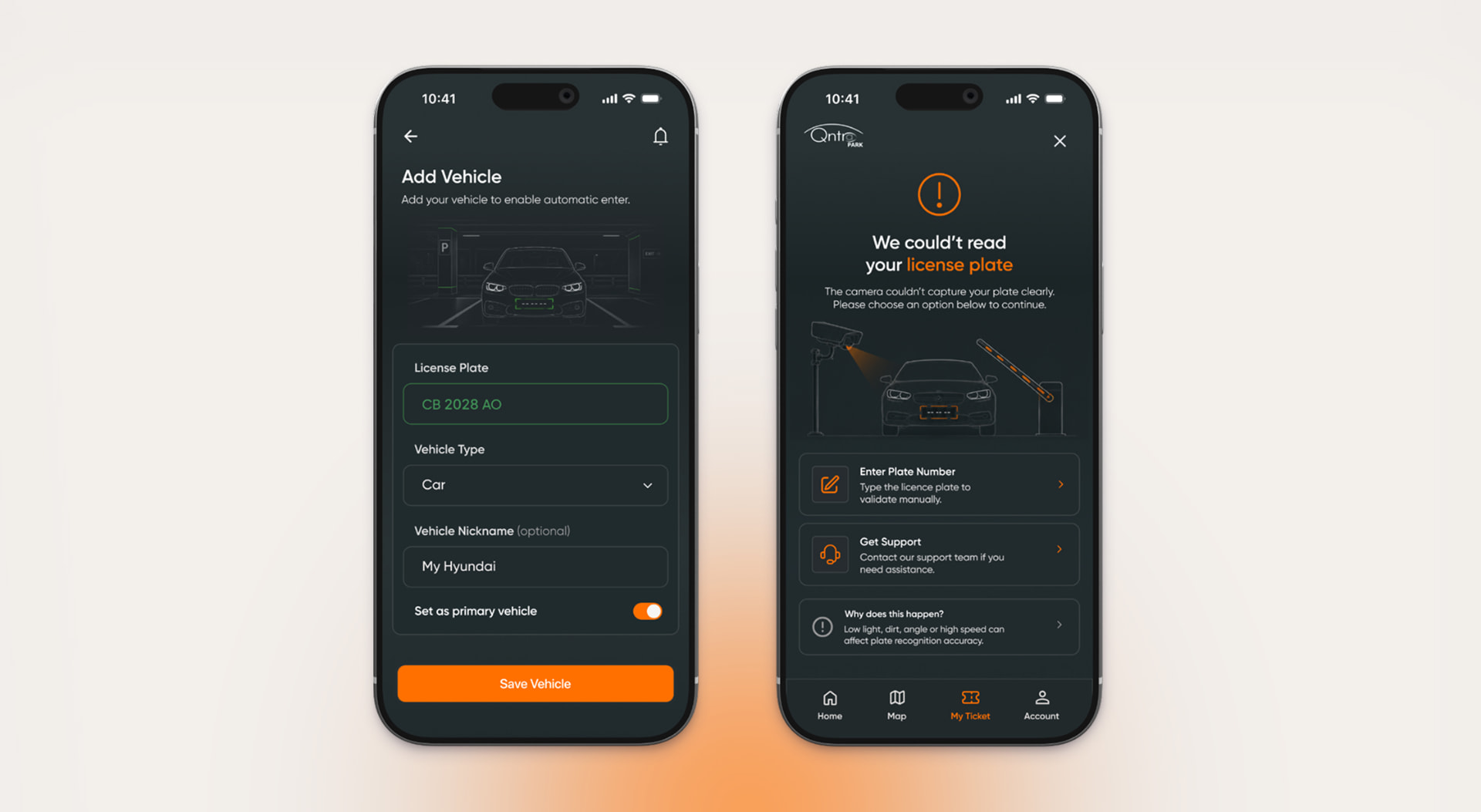
Waiting for the driver's phone to reconnect and confirm later still leaves the barrier depending on an uncertain future event. AI-assisted research pointed to pay-by-plate instead: the card is linked to the plate in advance, charged server-to-bank. Trade-off: no in-the-moment confirmation, in exchange for a barrier that never waits on a connection at all.
The barrier doesn't wait for the bank to answer
Three decisions, built around one idea: meet each driver where they already are, whether that's zero interaction or no app at all.
No ticket to pull, no button to press
For registered plates, the camera recognises the car and the barrier lifts automatically, nothing to pull, nothing to press, just a brief pause while it opens.
Two ways to pay, same principle
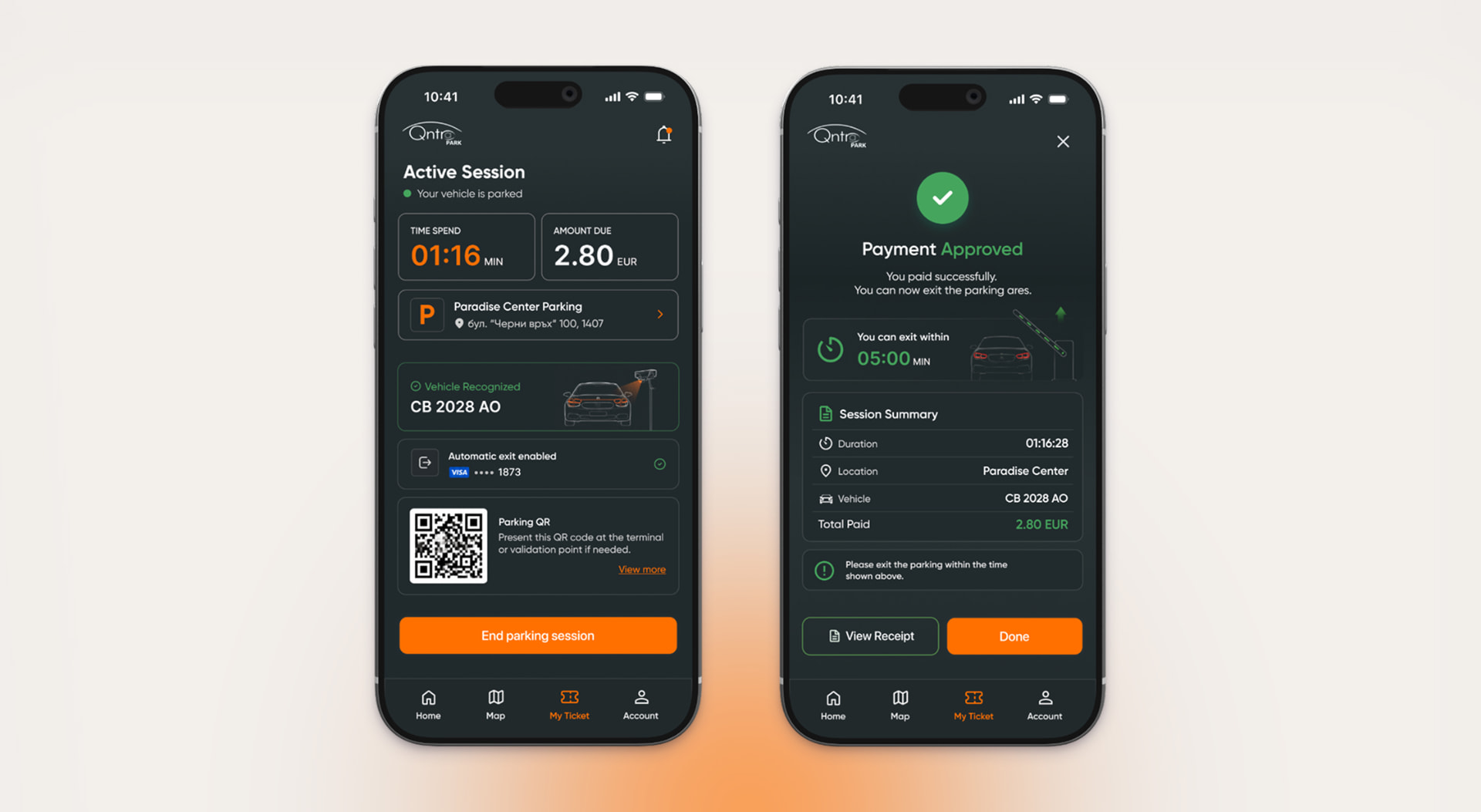
Automatic charging after the driver authorizes it once, or manual payment in the app before exit. Either way, the barrier never waits on a live confirmation from the phone.
No app? Nothing changes for you
If the plate isn't registered, the barrier stays down until the driver pulls a ticket, and pays the old way at the terminal on exit, exactly like today. Zero forced adoption.
The missing layer, not a new system
The value wasn't in adding functionality. It was fitting the one missing layer into an already-working system, with the smallest possible lift for the business to adopt it.
For the driver, the goal was just as simple: take time away from the small, annoying parts of parking, searching for a ticket, walking to a machine, wondering what you owe, so that entering and leaving barely register as a task.
"Drivers don't need a new system. They need the existing one to finally talk to them."